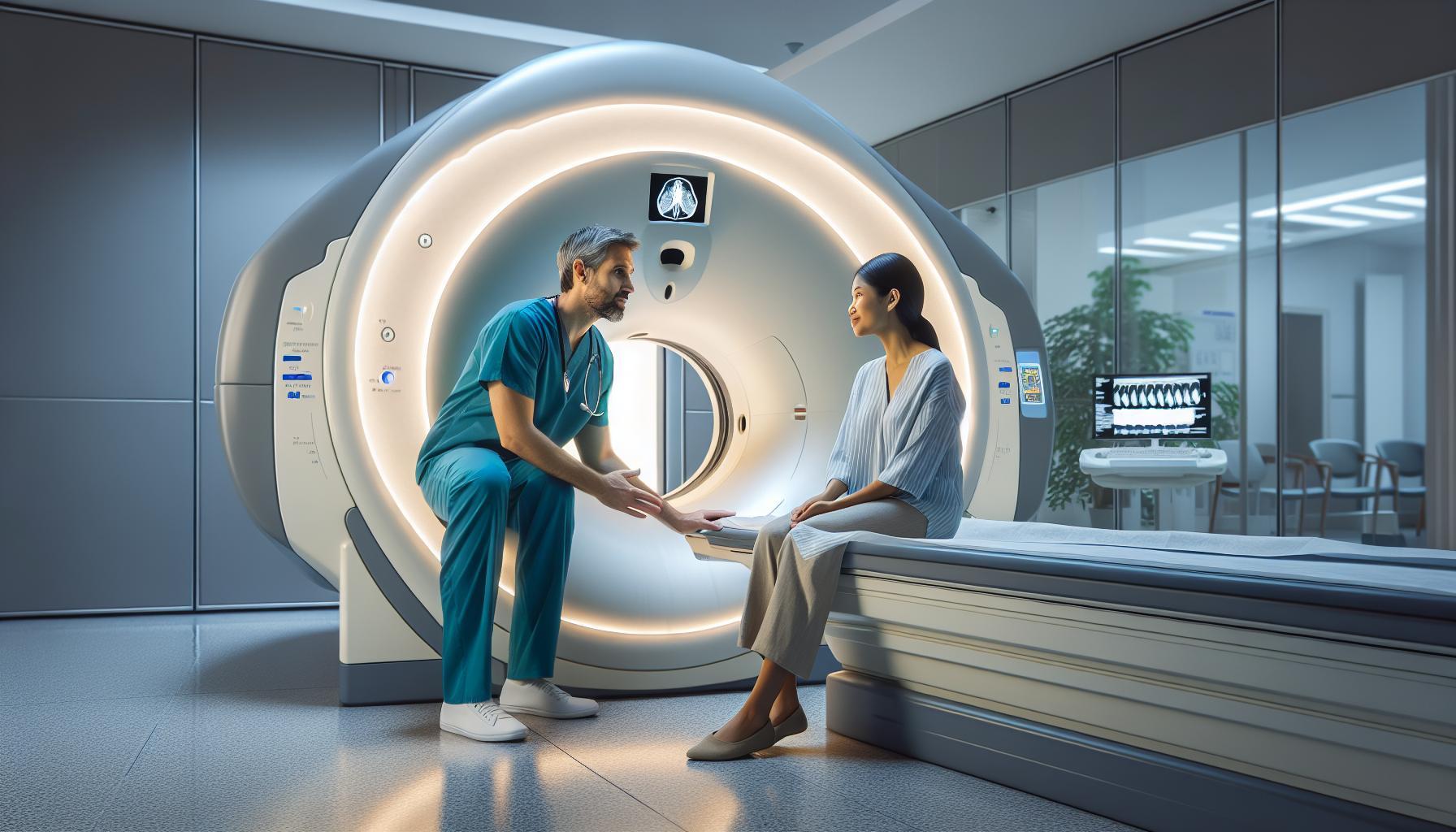
Every year, millions of people undergo CT scans to diagnose health conditions, making this imaging technique a fundamental part of modern medicine. Understanding how to interpret CT images can empower patients, helping them grasp their medical situations better and aiding in informed discussions with healthcare providers. This guide will walk you through the basics of reading CT scans, offering insights into what those images reveal about the human body.
Navigating medical information can be overwhelming, especially when faced with imaging results that impact your health decisions. Whether you’re a patient curious about your results or someone seeking to expand their knowledge, this guide demystifies CT scans, addressing common concerns and providing a clear framework for understanding these crucial diagnostic tools.
Stay with us as we delve into the world of CT imaging, arming you with the knowledge necessary to approach your health with confidence and clarity.
Understanding the Basics of CT Scans
CT scans, or computed tomography scans, are powerful imaging tools that provide a detailed look inside the body. They utilize X-rays and advanced computer algorithms to create cross-sectional images, enabling healthcare professionals to visualize organs, tissues, and structures with clarity and precision. This technology is particularly invaluable in emergency medicine where rapid diagnosis can be crucial. For instance, in the case of a concussion, a CT scan is standard practice to quickly assess potential brain injuries right after trauma [[1]].
The basic principle behind CT imaging involves taking multiple X-ray images from different angles and then using a computer to stitch them together into a comprehensive 2D or 3D image. This process allows healthcare providers to examine internal structures in greater detail than traditional X-rays can offer. For example, while an X-ray may show a broken bone, a CT scan will provide information about the surrounding soft tissues, blood vessels, and even fractures that are not easily visible through standard imaging.
When considering a CT scan, many people have questions about preparation and what to expect. Depending on the area being scanned, preparation might include fasting for a few hours or wearing specific clothing. The procedure itself is straightforward: patients lie on a table that slides into a large donut-shaped machine while the scan is performed. It typically takes only a few minutes, and while the experience can be noisy, it’s generally painless. Understanding these fundamental concepts can help alleviate anxiety and foster a sense of control during the imaging process.
The Science Behind CT Imaging Technology
CT imaging, or computed tomography, is a remarkable advancement in medical diagnostics that combines sophisticated technology with intricate physics principles. At its core, CT scans utilize X-rays to capture detailed images of the body’s internal structures from multiple angles. These images are then processed by a computer, which assembles them into cross-sectional views, allowing healthcare providers to see soft tissues, organs, and even blood vessels in ways that traditional X-ray imaging simply cannot achieve. This multi-dimensional capability significantly enhances diagnostic accuracy and offers a clearer picture of numerous health conditions.
One of the standout features of CT scans is their ability to produce high-resolution imagery swiftly, which is particularly beneficial in emergency situations. For instance, a patient experiencing severe abdominal pain may undergo a CT scan to quickly identify potential causes such as appendicitis or internal bleeding. The precision and speed of CT imaging can be crucial in guiding timely treatment, ultimately influencing patient outcomes in critical scenarios.
Before undergoing a CT scan, understanding the science behind this technology can help lessen any anxieties. Patients might wonder how their bodies can generate such detailed images with radiation; however, it is important to note that while CT scans do involve exposure to a small amount of radiation, the diagnostic benefits typically far outweigh the risks. Medical professionals carefully weigh these factors when recommending CT imaging for patients.
In conclusion, CT imaging represents the convergence of physics, engineering, and medicine, transforming how clinicians diagnose and treat various conditions. By breaking down barriers of visibility within the human body, CT scans empower both patients and healthcare providers with the knowledge necessary for effective medical decision-making.
How CT Scans Differ from Other Imaging Techniques
The realm of medical imaging is rich and varied, offering different techniques to visualize the intricacies of the human body, each serving distinct functions and providing unique advantages. CT scans, or computed tomography scans, stand out significantly compared to traditional X-ray imaging and other modalities like MRI and ultrasound due to their ability to generate detailed cross-sectional images of the body. This capability arises from the technology’s use of X-rays and sophisticated computer algorithms, allowing for a comprehensive view of internal structures without the need for invasive procedures.
Traditional X-rays primarily offer two-dimensional images, which can sometimes obscure the complexity of overlapping structures. This limitation is crucial in cases where detailed anatomical insights are needed, such as when evaluating potential fractures or tumors. In contrast, CT scans can capture multiple slices of the body, assembling them into 3D representations that enhance diagnostic accuracy, particularly in scenarios involving soft tissue, organs, and blood vessels.
Another modality, Magnetic Resonance Imaging (MRI), utilizes powerful magnets and radio waves to create images and is exceptional for visualizing soft tissue like the brain, muscles, and ligaments. While MRIs provide high-resolution images, they typically take longer than CT scans. Additionally, MRI machines can be more challenging for those with claustrophobia, whereas CT scans are often more patient-friendly, as the process is quicker and much like a routine X-ray.
Despite its advanced capabilities, a CT scan does involve exposure to ionizing radiation, causing it to diverge from other imaging techniques like ultrasound, which uses sound waves and carries no radiation risk. Ultrasound is especially useful for real-time imaging and is often employed in obstetrics and abdominal evaluations. However, while ultrasound can be excellent for soft tissues and fluids, it may not provide the detailed structural insights necessary in many cases, highlighting the nuanced choice between different imaging methods based on clinical needs.
In navigating these options, patients are encouraged to engage in open discussions with their healthcare providers. Understanding the specific advantages and limitations of CT scans compared to other imaging techniques can help alleviate concerns and aid in making informed decisions tailored to individual health circumstances. This knowledge empowers patients, ensuring they feel confident and secure as they approach their imaging procedures.
Preparing for Your First CT Scan: A Step-by-Step Guide
Preparing for a CT scan can feel daunting, especially for first-timers, but understanding the steps involved can significantly ease anxiety and ensure a smooth experience. A CT scan, also known as a computed tomography scan, is a painless yet intricate imaging procedure designed to provide detailed cross-sectional images of your body, aiding in the diagnosis and evaluation of various health conditions. Familiarizing yourself with the preparation process will empower you and help you approach your appointment with confidence.
Before your CT scan, it’s essential to discuss any medications you are currently taking with your healthcare provider. Certain medications, including blood thinners and diabetes medications, may require special considerations. Additionally, if you have allergies, particularly to iodine or contrast materials, this should be communicated beforehand, as this information can influence the type of scan and the use of contrast agents.
In the days leading up to your CT scan, you might be instructed to adhere to specific dietary or activity guidelines. For instance, you may be advised to avoid eating or drinking for a period before the procedure, especially if a contrast agent will be used. This is crucial to ensure the clarity of the images and reduce the risk of adverse reactions if contrast material is involved. Remember to wear comfortable, loose-fitting clothing on the day of your scan and avoid accessories like jewelry or clothing with metal fasteners, as these can interfere with the imaging process.
On the day of the scan, it’s beneficial to arrive early to complete any necessary paperwork and discuss any last-minute concerns with the radiology staff. This allows you to relax and take a moment to gather your thoughts. Once inside the imaging room, you will be asked to lie down on a narrow examining table, which will slide into the CT scanning machine. The procedure itself is quick, often taking only a few minutes, and you may even find it less intimidating than expected.
A final note: after your scan, there are generally no restrictions on your daily activities; however, if you receive a contrast agent, your provider may offer specific post-scan guidelines to follow. Understanding each of these steps and their purposes can transform your experience, making what might seem overwhelming into a simple, straightforward procedure. Always remember to consult with your healthcare provider regarding any concerns or questions you may have, as they can provide tailored advice specific to your situation.
What to Expect During a CT Scan Procedure
Undergoing a CT scan can be a pivotal moment in your healthcare journey, providing essential insights that guide diagnosis and treatment. Understanding what happens during the procedure can alleviate anxiety and help you feel more prepared.
When you arrive for your CT scan, you will typically be greeted by a radiologic technologist who will explain the procedure in detail. This is a great opportunity to ask any lingering questions or clarify any concerns. You’ll be asked to change into a gown to ensure that your clothing does not interfere with the imaging process. Once you’re ready, you will lie down on a narrow examination table that slides into the CT machine, which resembles a large donut.
As the scan begins, the table will move through the cylinder-shaped scanner. During the imaging process, you may hear a rhythmic clicking or whirring noise, which is completely normal as the machine captures detailed cross-sectional images of your body. It’s crucial to remain as still as possible during the scan; even minor movements can blur the images. The technologist may ask you to hold your breath briefly at certain points to maintain clarity in your scans. The entire process is typically quick, usually taking only 10 to 30 minutes, depending on the specific area being examined and whether or not a contrast agent is used.
In cases where a contrast agent is required to enhance the images, you may receive it through an intravenous (IV) line or, for some types of scans, as an oral solution. While most people tolerate contrast agents well, you may feel a warm sensation as it enters your bloodstream, which is a common experience and usually subsides quickly. After the images are captured, the technologist will review them to ensure they are of high quality, although you won’t receive the results immediately. Typically, a radiologist will analyze the images and send a report to your healthcare provider, who will discuss the findings with you during a follow-up appointment.
Throughout this experience, remember that the staff is there to support you and address any concerns. You are encouraged to communicate openly with them about any anxiety or discomfort you may feel. Understanding these steps and knowing what to expect can transform a potentially stressful experience into a manageable one.
Safety Considerations: Risks and Benefits of CT Scans
When it comes to medical imaging, understanding the safety considerations surrounding CT scans is crucial. These advanced imaging techniques utilize X-rays to create detailed images of the body’s internal structures, making them invaluable for diagnosis and treatment planning. However, like any medical procedure, they come with both risks and benefits that patients should be aware of.
Benefits of CT Scans
CT scans are incredibly efficient diagnostic tools. They can help identify conditions such as tumors, internal injuries, and infections within minutes, making them essential in emergency situations. The precision of a CT scan allows healthcare providers to visualize complex organs and structures in ways that traditional X-rays cannot. Additionally, the scans often provide critical information to guide further treatment decisions, potentially improving patient outcomes.
Potential Risks
Despite their advantages, one of the primary concerns associated with CT scans is radiation exposure. CT scans expose patients to higher doses of radiation compared to conventional X-rays. While the risk of developing cancer from a single CT scan is low, it is important to minimize exposure whenever possible. Patients should communicate with their healthcare provider about their medical history and any previous imaging done, especially if undergoing multiple scans.
Another consideration is the use of contrast agents in some CT procedures. These agents enhance the visibility of blood vessels and organs but can sometimes lead to allergic reactions. Although adverse reactions are rare, it’s vital for patients to inform their healthcare provider about any allergies or kidney issues prior to receiving contrast material.
Informed Decision Making
Ultimately, the decision to proceed with a CT scan involves weighing the benefits against the potential risks. Open and honest communication with your healthcare provider will empower you to make informed choices about your imaging needs. It is essential to discuss whether a CT scan is the best option for your situation or if alternative imaging methods, such as MRI or ultrasound, might be suitable. Remember, your health and safety are paramount, and understanding these elements can help ease anxieties associated with medical imaging.
Interpreting CT Scan Results: A Beginner’s Overview
Interpreting the results of a CT scan can often feel daunting, especially for those who are unfamiliar with medical imaging. Understanding the basics of what the images reveal is crucial, as they can provide essential insights into a patient’s health. A CT scan produces a series of detailed cross-sectional images of the body, allowing healthcare providers to examine the internal organs, tissues, and structures in a comprehensive manner. The results can help identify a wide range of conditions, from fractures and tumors to internal bleeding and infections.
When you receive your CT scan results, they will typically come in the form of images along with a report generated by the radiologist. The radiologist is a medical doctor specialized in interpreting imaging studies. This report will outline the findings, including any abnormalities or areas of concern, often using specific medical terminology. However, it’s essential to remember that the presence of an abnormality does not necessarily indicate a serious health issue. Many findings can require further investigation or monitoring rather than immediate action.
It can be helpful to approach these results with an understanding of some common terms and concepts. For instance, contrast agents may have been used during the scan to enhance visibility. These agents help highlight specific areas, such as blood vessels or organs, making any irregularities more apparent. If your report mentions “hyperdense” or “hypodense” areas, these describe the relative density of structures compared to the surrounding tissue, which can signify a range of conditions based on the context.
While it’s natural to feel anxious about these results, having a clear dialogue with your healthcare provider can alleviate concerns and clarify any confusion. Discussing your results in detail provides an opportunity to ask questions about what they mean, the implications for your health, and the next steps in your care plan. Remember, an informed patient is an empowered patient, and understanding your CT scan results is a crucial part of managing your health effectively.
Common Uses of CT Scans in Medical Diagnosis
A CT scan is a powerful tool in modern medicine, widely used for its ability to provide detailed images of the internal structures of the body. This imaging technique is particularly helpful in diagnosing various conditions due to its proficiency in visualizing complex anatomical regions. From trauma cases to ongoing health issues, CT scans play a crucial role in medical diagnostics.
One of the primary uses of CT scans is in the evaluation of suspected fractures and internal injuries. In emergency settings, a CT scan can quickly identify injuries to bones and organs, which is vital in guiding treatment decisions. For instance, following an accident, a provider might order a CT scan of the abdomen to determine if there are any internal bleeding or organ injuries, which are not visible through standard X-rays.
CT scans are also instrumental in diagnosing cancers. By providing cross-sectional images, healthcare providers can detect tumors in various organs, assess their size, and evaluate their spread to surrounding tissues. The detailed visualization aids in staging cancers, which is essential for defining treatment strategies. Additionally, CT scans are routinely used to monitor the effectiveness of ongoing treatment by assessing changes in tumor size.
Moreover, CT imaging is frequently utilized in evaluating the lungs. Conditions such as pneumonia, lung cancer, and pulmonary embolism can be diagnosed more accurately with the detailed cross-sectional images provided by CT scans. For patients experiencing unexplained abdominal pain, a CT scan can help reveal issues related to the gastrointestinal tract, such as appendicitis or diverticulitis, offering a pathway to appropriate intervention.
Overall, the versatility and precision of CT scans make them an indispensable element in healthcare, helping to guide diagnosis and treatment for a broad spectrum of medical issues. If you’re facing a CT scan, understanding its capabilities can provide reassurance and clarity about its role in your healthcare journey. Remember, your healthcare provider can offer personalized insights tailored to your individual situation.
The Role of Contrast Agents in CT Imaging
When it comes to CT scans, the role of contrast agents is pivotal in enhancing the quality of images and ensuring accurate diagnoses. Contrast agents are substances introduced into the body to improve the contrast of structures or fluids within the images. By highlighting specific areas, these agents allow healthcare professionals to gain clearer insights into potential abnormalities, making them invaluable for an array of medical conditions.
How Contrast Agents Work
Contrast agents, often made of iodine or barium, function by altering the way X-rays pass through the body. For example, iodine-rich contrast can help visualize blood vessels, organs, and areas of inflammation by making them appear distinctly from surrounding tissues on the CT images. This clear delineation is crucial for diagnosing conditions such as tumors, kidney stones, or vascular diseases. Depending on the type of scan and the body area being examined, different kinds of contrast agents may be used.
Patient Experience with Contrast Agents
Understanding what to expect can ease anxiety about undergoing a CT scan with contrast. Before the procedure, patients are typically asked about allergies, especially to iodine or shellfish, as well as their medical history regarding kidney problems. The administration of the contrast agent can be done in various ways-via intravenous (IV) injection or orally, depending on the examination. Many patients report feeling a warm sensation or a metallic taste in their mouth shortly after receiving the agent, which is generally harmless and subsides quickly.
Additionally, it’s essential to highlight two potential considerations regarding contrast agents: the risk of allergic reactions and the possibility of nephrotoxicity, especially in individuals with pre-existing kidney conditions. Healthcare providers will evaluate these risks and determine the appropriateness of using contrast based on individual patient history.
In summary, the inclusion of contrast agents in CT imaging significantly enriches the diagnostic process by providing clearer and more detailed images. This enhanced visualization helps guide treatment decisions and facilitates timely interventions. As always, if you have concerns or questions regarding the use of contrast agents, don’t hesitate to consult with your healthcare provider for tailored advice.
Cost Considerations: What to Expect for a CT Scan
The cost of a CT scan can vary significantly based on multiple factors, including location, facility type, and whether or not you have insurance. On average, a CT scan can cost anywhere from $300 to $3,000, and it’s essential to understand these variables to anticipate your expenses.
Understanding Cost Components
Several elements contribute to the total cost of a CT scan:
- Facility Fees: Different facilities charge varying amounts; hospitals often have higher fees compared to outpatient imaging centers.
- Type of CT Scan: Specialized scans (e.g., brain CT vs. chest CT) may incur different charges. A scan with contrast agents often costs more due to additional materials and monitoring provisions.
- Insurance Coverage: If you have insurance, your out-of-pocket expenses will depend on your plan’s deductibles and copays. Some plans may cover the entire cost after you meet your deductible.
- Geographical Location: Costs can vary widely depending on where you live; urban centers may have different pricing structures than rural areas.
Patients may also encounter added costs such as physician interpretation fees for the scan results and pre-scan consultations. Understanding these potential expenses can help in planning and reducing financial stress.
Ways to Manage CT Scan Costs
For those concerned about CT scan costs, there are strategies to manage expenses effectively:
- Insurance Verification: Always verify your insurance coverage and what is included before scheduling the scan to avoid surprises.
- Ask for Cost Estimates: Request a detailed estimate from the facility outlining all potential costs, including any fees associated with contrast agents.
- Consider Alternative Facilities: Shop around for competitive pricing in your area; don’t hesitate to ask about payment plans or discounts for uninsured patients.
- Talk to Your Healthcare Provider: If cost is a concern, discuss your financial situation with your doctor, who may recommend alternative imaging methods or facilities.
By being informed and proactive, patients can navigate the often-complex landscape of medical imaging costs with greater confidence and clarity. Engaging in conversations with your healthcare provider about financial considerations can help ensure that your need for imaging does not come at an excessive expense.
Patient Stories: Real Experiences with CT Imaging
It’s not uncommon for individuals to feel nervous about undergoing a CT scan; however, sharing real experiences can help demystify the process and put patients at ease. One patient, Sarah, described her anxiety leading up to her first CT scan, as she had read varying accounts about the procedure. When she arrived, the staff was warm and welcoming, taking the time to explain each step of the process. This attentive care made her feel reassured. Sarah emphasized the importance of asking questions and expressing any concerns-this not only informed her, but also built rapport with the technicians, easing her nerves significantly.
Another patient, John, shared his experience regarding the preparatory steps he took before his scan. He was instructed to avoid eating for a few hours prior, especially as he was required to receive a contrast agent during the procedure. John noted that he felt well-prepared after reviewing guidelines and speaking with his healthcare provider. He felt empowered knowing he could focus on his health rather than the procedure itself. His scan revealed critical information about his condition, ultimately aiding in the development of an effective treatment plan.
Listening to patient accounts can also underscore the practical aspects of what to expect during a CT scan. Many patients have noted that while the machine makes some unusual sounds, it moves quickly and is largely painless, which tends to quell fears associated with potential discomfort or claustrophobia. Understanding these details in advance can transform a daunting experience into a manageable one.
As with any medical procedure, the importance of open communication cannot be understated. Patients should feel encouraged to share their worries and experiences with their healthcare providers. By doing so, they not only gain valuable insights but also foster a supportive environment that improves overall care.
Frequently Asked Questions About CT Scans
Frequently, patients find themselves with numerous questions about CT scans, reflecting both curiosity and concern as they prepare for this advanced imaging technique. Understanding the answers to these questions can foster a sense of reassurance and clarity, ultimately enhancing the overall experience.
One common inquiry is about the safety of CT scans. While CT scans utilize X-rays, which involve exposure to a small amount of radiation, the benefits usually outweigh the risks, especially when a scan is necessary for diagnosis. Healthcare professionals make every effort to use the lowest dose of radiation possible while ensuring that they obtain the necessary medical information. Newer CT imaging technology is designed to minimize exposure while optimizing image quality, which is particularly reassuring for patients needing multiple scans over time.
Another frequent concern revolves around the use of contrast agents during CT scans. These agents are often used to enhance image clarity, allowing doctors to see certain areas more effectively. Patients may worry about allergic reactions. While serious reactions are rare, it is essential to inform the healthcare team of any known allergies or past experiences with contrast materials. For many, the contrast enhances their scans significantly, leading to more accurate diagnoses and better treatment plans.
Cost is also a significant concern. Patients should check with their insurance providers beforehand to understand what is covered under their plans. This preparatory step can ease financial anxiety and allow for a clearer focus on health and recovery. Patients should also ask the facility about the typical costs associated with their specific procedures.
Ultimately, open communication with healthcare providers can transform any lingering fear into confidence. Encouraging patients to voice their questions and apprehensions not only aids their understanding but also contributes to a more personal and informative healthcare experience.
Faq
Q: What is a CT scan, and how does it work?
A: A CT scan, or computed tomography scan, is an advanced imaging technique that combines X-ray technology with computer processing to create detailed cross-sectional images of the body. By rotating around the patient, it captures multiple images, which computers then reconstruct into a comprehensive view of organs, bones, and tissues.
Q: How do I prepare for a CT scan?
A: Preparing for a CT scan typically involves following fasting guidelines if contrast dye will be used. Wear comfortable clothing and remove any metallic objects. Inform your doctor about any medications you’re taking or if you have allergies, especially to iodine, to ensure a safe procedure.
Q: What should I expect during a CT scan?
A: During a CT scan, you’ll lie on a table that moves through a large, doughnut-shaped machine. You may need to hold your breath for a few seconds while images are taken. The scan is painless, and the entire procedure usually lasts about 10 to 30 minutes.
Q: Are there any risks associated with CT scans?
A: While CT scans are generally safe, they do involve exposure to radiation. The risks include potential allergic reactions to contrast agents and rare cases of radiation-induced cancer. Discuss any safety concerns with your healthcare provider prior to the scan.
Q: How long does it take to get CT scan results?
A: CT scan results are usually available within a few hours to a few days, depending on the facility’s processes. A radiologist will interpret the images and send a report to your doctor, who will discuss the findings with you.
Q: Can a CT scan detect all medical conditions?
A: No, a CT scan cannot detect all medical conditions. It is particularly effective for visualizing internal injuries, tumors, and infections but may not identify certain soft tissue conditions or functional disorders. Always consult your doctor for appropriate diagnostic options.
Q: What happens if I need contrast for my CT scan?
A: If contrast is needed for your CT scan, it may be administered intravenously or orally prior to the scan to enhance image clarity. Ensure you discuss any allergies you may have with your doctor, as some individuals may experience reactions to contrast materials.
Q: Can I drive after a CT scan?
A: If you received a sedative or contrast dye during your CT scan, it’s advisable to have someone drive you home. If you did not receive any sedation, you should be fine to drive unless advised otherwise by your healthcare provider. Always check with your healthcare professional regarding specific aftercare instructions.
Wrapping Up
Understanding how to read CT scans is a vital skill that empowers you in navigating the complexities of medical imaging. Armed with the knowledge from this guide, you can approach your next imaging appointment with confidence. Remember, while you can gain valuable insights from the images, discussing results with your healthcare provider is key to personalized care.
Don’t miss out on further enriching your understanding-explore our articles on “What to Expect During a CT Scan” and “Understanding CT Scan Results” for more detailed information. If you’re ready to take the next step, consider signing up for our newsletter for ongoing insights and updates, or reach out for a consultation to discuss your specific imaging needs. Your health is paramount, and we’re here to support you on this journey. Engage with us in the comments below and share your experiences or questions; we’re here to help!